
Last Updated on January 13, 2026
You just got back from a charter trip with a cooler full of fish. Now what?
Red snapper, flounder, tripletail, mahi, and wahoo are the best-eating fish in the Gulf. This guide ranks the rest and covers what to do with everything in your cooler.
Best Gulf Fish for Eating
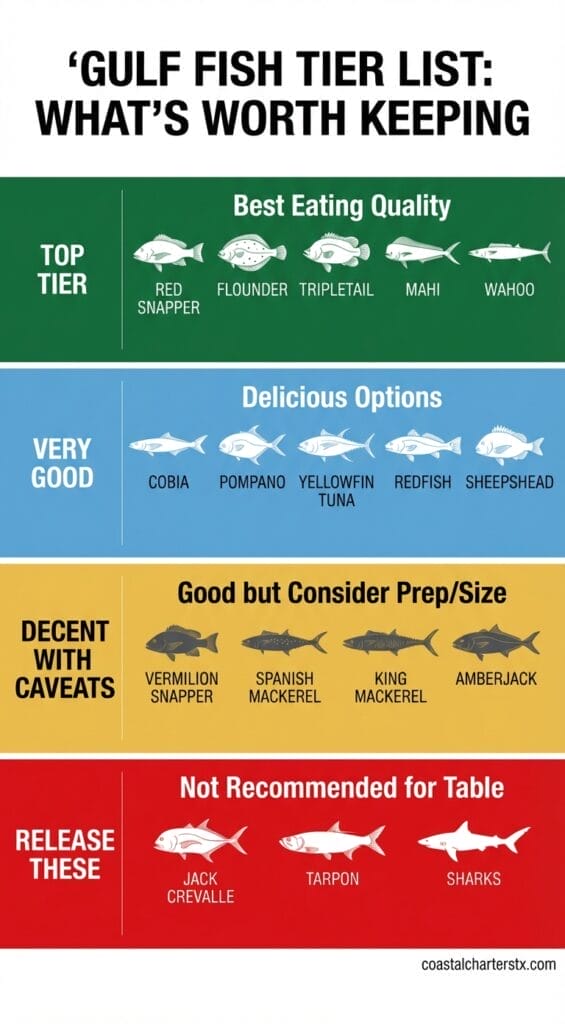
Top Tier
Red Snapper
Ask a hundred anglers on the Texas coast what the best-tasting saltwater fish is, and red snapper wins that poll. The meat is white, flaky, and has a sweet flavor that doesn’t need much help from seasoning. You can fry, grill, bake, or blacken it. It withstands almost any preparation without falling apart or drying out.
Federal snapper season in open waters beyond nine miles runs just a few weeks each summer, and the dates change yearly based on quota. Texas state waters stay open year-round, which is why offshore trips out of Port Aransas can target legal snapper when other states can’t.
Don’t skip the snapper throats. They’re the best part of the fish. Most people throw the carcass away after filleting, but those throats have more flavor than the fillets themselves.
Flounder
Flounder is the fish Texas anglers argue about most, but not because of the taste. Everyone agrees it’s excellent. The debate is whether it’s THE best. The meat is delicate, buttery, with a fine flake that practically dissolves.
The catch: flounder doesn’t hold up well in the cooler or freezer. It goes mushy fast. If you’re keeping flounder, eat it within a day or two. The folks who complain about mushy texture usually froze it or let it sit too long before cooking.
Stuffed flounder with crab and shrimp is a Gulf Coast standard. Pan-seared flounder with olive oil and lemon works just as well if you want something simpler. The mild flavor lets whatever you pair it with shine.
Flounder run hard in the fall during their migration to the Gulf. That’s when TPWD closes the season to protect spawning fish, typically November through mid-December. Check current regulations before targeting them.
Tripletail (Blackfish)
Here’s the fish that doesn’t get enough credit. Tripletail might be the most underrated eating fish in the Gulf of Mexico. The meat is snow-white, firm, and has a clean, slightly sweet flavor. Some people compare it to grouper, but tripletail holds moisture better.
These fish float near the surface around crab trap floats, channel markers, and floating debris. They look dead. They’re not. They’re ambush predators waiting for shrimp and small fish to swim by.
The only reason tripletail isn’t more popular is availability. You don’t catch them in big numbers. They’re scattered singles and pairs, not schools. When you do find one, keep it. Forum after forum, anglers who’ve tried tripletail put it at or near the top of their list.
Mahi (Dolphinfish)
Mahi is the offshore fish everyone recognizes, and the reputation is earned. The meat is firm, slightly sweet, and holds together on the grill. It takes strong flavors well. Jerk seasoning, mango salsa, citrus marinades. This is a flavorful fish that pairs well with bold preparations.
Peak mahi season runs May through September when the fish follow weed lines into Texas waters. They’re one of the most common catches on offshore trips during summer.
Mahi dries out quickly if overcooked. Medium is about right. If grilling, pull it when the center is still slightly translucent. Carryover heat finishes the job. Mahi also works well for fish tacos or ceviche if you want to go a different direction.
Wahoo
Wahoo is a steak that swims. The meat is white, dense, and has almost no fishy taste at all. Blindfolded, you might guess you’re eating pork before you guess fish.
The firm texture is what sets wahoo apart. Cut it into thick steaks and sear them like beef. Rare to medium-rare is ideal. Overcooked wahoo turns dry and cardboard-like. Some people slice it thin for sashimi with soy sauce, which works if the fish was handled correctly and iced immediately.
Catching wahoo is its own challenge. They’re fast, toothy, and unpredictable. A wire leader is mandatory. When you land one, you’ve earned one of the best-eating fish the Gulf produces.
For timing, check the seasonal fishing calendar.
Very Good
Cobia (Ling)
Cobia is a sleeper hit. The meat is firm and mild with a texture denser than most whitefish. It grills well, fries well, and makes excellent fish tacos.
Cobia hang around floating structures: buoys, crab pots, anchored boats. During spring migration, they follow manta rays and sea turtles, picking off small fish and crabs. If you see a ray cruising near the surface, watch for the brown shape behind it.
The texture is almost meaty, closer to swordfish than snapper. You can cube it for kabobs, slice it thin for ceviche, or cook thick steaks on high heat. It stays moist even with aggressive cooking.
Pompano
Pompano commands seafood market prices for a reason. The meat is rich and buttery with enough natural fat that it stays moist even if you slightly overcook it.
Most pompano weigh between one and three pounds, so you’re eating the whole fish rather than dealing with fillets. That’s a good thing. Pompano cooked whole on the grill, scored and seasoned with salt and citrus, is hard to beat.
These fish run along the beaches and jetties in spring and fall. Surf anglers target them specifically because the payoff is worth the effort.
Yellowfin Tuna
Yellowfin is different from everything else on this list. The meat is dark red, rich, and distinctly meaty. It’s best seared rare or served as sashimi. Cook it all the way through, and you’ve wasted good fish.
The dark bloodline running through each loin has a stronger, fishier taste. Most people trim it out. The lighter meat on either side is the prize.
Night fishing under offshore oil platforms is the classic way to catch yellowfin out of Texas. The lights attract baitfish, which attract tuna. If you’re into sushi-grade fish, proper handling matters. Bleed immediately, ice heavily, and keep the meat cold until it hits the plate.
Redfish (Red Drum)
Blackened redfish is a Louisiana invention that spread across the Gulf Coast because it works. The meat is mild with a sweet undertone, and it takes blackening spices without losing its own character.
Here’s the thing most guides won’t tell new anglers: bull reds over 30 inches don’t eat as well as slot-sized fish. The meat gets coarser and develops a stronger taste. Keep the 20 to 28-inch fish for the table. Release the big ones.
Redfish on the half shell is a Texas standard. Leave the scales on one side of the fillet, place it scale-side down on the grill, and cook until the meat is cooked through. The scales act as a barrier. Peel the meat off when finished.
Our bay fishing trips target slot reds in the back bays and along the jetties year-round.
Sheepshead
Sheepshead look strange with their human-like teeth, but the meat is one of the Gulf’s most underrated. They eat crabs, shrimp, and oysters almost exclusively, which gives the meat a sweet, shellfish-like flavor unlike any other fish.
The texture is firm and white. Deep-fried sheepshead is excellent. The challenge is catching them. Sheepshead are notorious bait stealers. They’ll clean your hook without any indication they’re there. Light tackle, small hooks, and close attention to your line are the only ways to hook them consistently.
Look for sheepshead around jetties, pilings, and barnacle-covered structures. The Port Aransas jetties hold them year-round.
Speckled Trout (Sea Trout)
Speckled trout are a Texas inshore favorite. The meat is mild and delicate with a soft, flaky texture. Fried speckled trout is a bay fishing tradition.
The downside: the meat doesn’t hold up well. It’s more flaky than redfish or drum, and it deteriorates faster in the cooler. Eat specks fresh, within a day of catching them. Frozen speckled trout loses quality fast.
Specks hang around oyster reefs, grass flats, and structure in the bays. They’re available year-round, with the largest fish appearing in winter. Our bay fishing trips target them regularly.
Black Drum
Black drum are the larger, darker cousins of redfish. Smaller drum in the 5 to 15 pound range have mild, sweet meat similar to red drum. They work well blackened, fried, or sauteed.
Larger black drum over 20 pounds get coarser and can carry parasites. Most anglers release the big ones and keep the smaller fish. The meat on a properly sized black drum is firm, white, and takes seasoning well.
You’ll find black drum around the same structure as sheepshead: jetties, pilings, and shell beds. They’re less picky than sheepshead about taking the bait.
Decent With Caveats
Vermilion Snapper
Vermilion snapper are smaller, brighter-colored cousins of red snapper. The taste is similar: sweet, mild, flaky. They school heavily on offshore reefs and bite aggressively.
The downside is size. Most vermilion run one to three pounds, so you need several fish for a meal. The fillets are small. Deep-fried whole after scaling works well if you don’t mind bones. Some people prefer to fillet and deep fry the small pieces.
Grouper (Scamp, Red Grouper)
Grouper is a category, not a single fish. Scamp grouper is often considered the best-eating of the bunch, with firm, white meat and a mild, sweet flavor. Red grouper is similar but slightly less prized by those who’ve tried both.
The meat on any grouper is moist and forgiving. It’s hard to dry out even if you overcook it slightly. Grilled, blackened, or fried, grouper works across preparations. The firm texture also makes it suitable for fish tacos.
Grouper fishing in Texas typically occurs in deeper water and over longer runs. They’re more common toward Florida but available on extended deep-sea trips out of Port Aransas.
Spanish Mackerel
Spanish mackerel is divisive, and most of that division comes from people who’ve eaten old fish. Fresh Spanish, caught that morning and cooked that night, is mild and quite good. The meat is flaky with just enough oil to stay moist.
The problem: quality drops fast. Spanish mackerel on ice for two days tastes oily and strong. Frozen is worse. If you catch Spanish and want to eat them, cook them the same day. No exceptions.
King Mackerel (Kingfish)
King mackerel gets a bad reputation, some of it deserved. Large kings have darker, oily meat with a stronger flavor. The fish also deteriorates quickly if not bled immediately.
That said, properly handled kingfish is good smoked. The oil content that makes it questionable when fried becomes an advantage in the smoker. It stays moist and absorbs smoke flavor.
Smaller kings in the 10 to 15 pound range eat better than the 40-pounders. If keeping king mackerel for the table, smaller is better.
Amberjack
Amberjack fight hard on offshore trips. The meat, when clean, is firm, mild, and grills well.
The problem is parasites. Larger amberjack often carry worms in their meat, especially during the warmer months. The worms aren’t harmful if cooked, but cutting into a fillet and finding them isn’t appetizing. Inspect the meat carefully.
Some anglers release big amberjack and keep only the smaller ones.
Release These
Jack Crevalle
Every Texas fishing forum has the same thread. Someone asks if jack crevalle are edible. The responses are almost universally negative.
The meat is dark red, bloody, and has a strong flavor that no amount of preparation can fix. You can try soaking in milk, buttermilk, lemon juice, marinating overnight. After all that work, you still end up with fish that tastes like blood.
Jack crevalle fight hard and hit aggressively. Catch them, photograph them, and let them go. They’re more valuable as shark bait than dinner.
Tarpon
Tarpon are catch-and-release only in Texas for good reason. Beyond regulations, they’re simply not good eating. The meat is bony, oily, and has a strong taste that most find unpleasant.
Tarpon are spectacular gamefish, though. The aerial display when a big tarpon jumps is worth the trip by itself.
Bluefish
Bluefish show up along the Texas coast occasionally, and while some people eat them, they’re not worth the effort. The meat is oily and develops a fishy taste quickly. If you’re going to try bluefish, it needs to be bled immediately, iced heavily, and cooked the same day. Even then, it’s an acquired taste that most Gulf Coast anglers skip.
Sharks
With few exceptions, sharks aren’t worth keeping for the table. The meat has high ammonia content that gives it an unpleasant smell and taste. Mercury is also a concern in larger sharks.
Small blacktip sharks can work if bled immediately, skinned, and soaked in milk or lemon juice. Even then, it’s a lot of work for mediocre results.
Keeping Your Catch Fresh
The difference between excellent fish and disappointing fish often comes down to the first hour after landing.
- Bleed immediately. Cut the gills or make a cut behind the pectoral fin. Blood left in the meat turns it dark and creates a fishier taste. This matters most for tuna and amberjack, but it helps all species.
- Ice properly. More ice than fish, not the other way around. Fish should be buried, not sitting on a thin layer. If you’re doing it right, you need more ice than expected.
- Get it cleaned fast. Fish sitting in a cooler with guts intact develop off-flavors. The cleaning table is the first stop after docking.
- Vacuum seal for freezing. Air ruins the quality of frozen fish. Vacuum-sealed fillets hold for months. Fish in bags with air pockets freezer-burns within weeks.
Gulf Fish at a Glance
Different types of fish require different preparations. Here’s a quick guide:
| Fish | Flavor | Texture | Best Preparation | Worth Keeping? |
|---|---|---|---|---|
| Red Snapper | Sweet, mild | Firm, flaky | Grilled, fried, blackened | Yes |
| Flounder | Buttery, delicate | Tender, fine flake | Pan-seared, stuffed | Yes |
| Tripletail (Blackfish) | Sweet, clean | Firm | Broiled, grilled | Underrated |
| Mahi (Dolphinfish) | Slightly sweet | Firm, meaty | Grilled, blackened | Yes |
| Wahoo | Mild, steak-like | Dense, white | Seared, grilled | One of the best |
| Cobia (Ling) | Mild, versatile | Firm, dense | Grilled, fried, ceviche | Excellent |
| Pompano | Rich, buttery | Delicate | Whole grilled, broiled | Yes |
| Yellowfin Tuna | Rich, meaty | Dense | Seared rare, sashimi | If you like it rare |
| Redfish (Red Drum) | Mild, sweet | Medium firm | Blackened, on the half shell | Slot-sized only |
| Sheepshead | Sweet, shellfish-like | Firm, white | Fried, broiled | Underrated |
| Speckled Trout (Sea Trout) | Mild, delicate | Soft, flaky | Fried, sauteed | Yes, but eat fresh |
| Black Drum | Mild, sweet | Firm, white | Blackened, fried | Smaller fish only |
| Vermilion Snapper | Sweet, mild | More flaky | Deep fried whole | Good but small |
| Grouper (Scamp, Red) | Mild, sweet | Firm, moist | Grilled, blackened, fried | Yes |
| Spanish Mackerel | Mild when fresh | Flaky, soft | Fried same-day | Only if eaten fresh |
| King Mackerel (Kingfish) | Stronger, oily | Firm | Smoked, grilled fresh | Best smoked |
| Amberjack | Mild, but check for worms | Firm, dense | Blackened, grilled | Inspect the meat |
| Jack Crevalle | Strong, bloody | Dark, oily | Don’t bother | Release |
| Tarpon | Strong, oily | Bony | None | Catch and release only |
| Bluefish | Oily, fishy | Soft | Bleed and cook same-day | Skip it |
| Sharks | Ammonia, strong | Firm | Too much work | Release |
Bringing Home Dinner
The variety of high-quality eating fish available from Port Aransas is one reason this stretch of coast is worth fishing. Inshore, offshore, bay, or jetties, you can fill a cooler with fish worth cooking.
Check the species guide for details on each fish, and see the fishing calendar to plan around what’s running.
Ready to load up the cooler? Book your trip or call (361) 850-0909.