
Last Updated on April 1, 2026
The 2026 red snapper season in Texas depends on how you fish. If you book a charter, your season is the longest option available.
- On a charter boat: June 1 through October 26, 2026 — 147 days. That is 19 days longer than 2025.
- Fishing your own boat in federal waters: Opens June 1. Texas projects about 82 days before the state’s quota is met and the season closes.
- Texas state waters (within 9 miles of shore): Open year-round.
All three have different bag limits and size minimums. The table below breaks it down.
Bag Limits and Size Limits
| Texas State Waters (0–9 nm) | Federal Waters | |
|---|---|---|
| Season | Year-round | Charter: June 1 – Oct 26. Own boat: ~82 days from June 1 |
| Daily bag limit | 4 per person | 2 per person |
| Minimum size | 15 inches | 16 inches |
Red snapper caught in federal waters count toward your state bag limit. If you keep 2 in federal water, you can keep 2 more once you are back in state water — but you cannot possess more than 2 while you are still in federal waters.
Check the current Texas Parks and Wildlife red snapper regulations before your trip. Rules change, and that page is always current.
Why Charter Boats Get a Longer Season
NOAA gives the charter fleet its own share of the Gulf red snapper allocation — 42.3% of the total. People fishing their own boats share the other 57.7%, managed state by state. The charter fleet has a track record of staying within its quota, which is why NOAA can give them 147 days while Texas boat owners get roughly 82.
On a charter, you are fishing under that longer allocation. Your season starts June 1 and runs into late October — well past when the season closes for private boats. You can read the full details in NOAA’s 2026 for-hire season announcement.
Where We Fish for Red Snapper
Your captain picks the structure based on conditions, but these are the main areas Coastal Charters works during snapper season.
- Mustang Island Liberty Ship Reef (MU-802) — Three EC-2 Liberty Ships sunk about 18 nautical miles from the Port Aransas jetties on a 141° bearing. The ships sit in 70–80 feet of water and provide the kind of high-relief steel structure red snapper hold on year-round. This is a starting point for a lot of snapper trips out of Port Aransas.
- Jacket reefs (MI-A-7, MU-828, MU-831) — Cut-off and modified platform jackets in 120–130 feet. These are taller structures in deeper water, and they tend to hold bigger fish. Research from the Harte Research Institute and TPWD monitoring work consistently finds strong red snapper numbers on these high-relief cutoffs.
- TPWD nearshore reef site — A 160-acre artificial reef between Packery Channel and Port Aransas in state waters, about 70 feet deep. TPWD built it with concrete pyramids, culverts, and reef modules specifically to hold snapper and other reef fish. Because it is in state waters, you can fish red snapper here year-round under state bag limits.
- Lonestar and Boatman’s reefs — Older state-water artificial reef sites near Port Aransas with concrete culvert structures. These nearshore spots contribute to why Texas can keep state-water snapper open 365 days.
If you want to explore the structure yourself, the TPWD Artificial Reefs Interactive Map has GPS coordinates, depth, and distance from port for every reef site on the Texas coast.
What Red Snapper Fishing Looks Like on a Charter
You leave the dock early and run out to wherever the fish are holding. On shorter trips, that can be 30 to 45 minutes to the nearshore reefs. On longer runs, you are heading 18 to 35 miles offshore to the Liberty Ships and jacket structures. Once you are on the spot, the crew rigs medium-heavy bottom rods and drops you down to the structure.
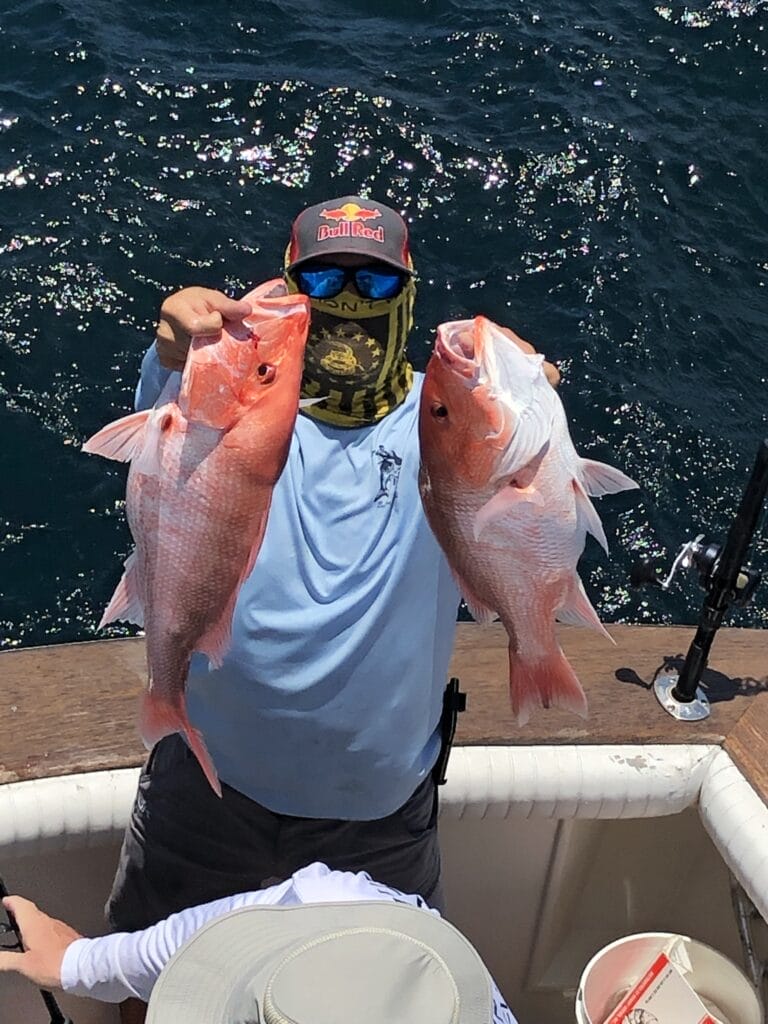
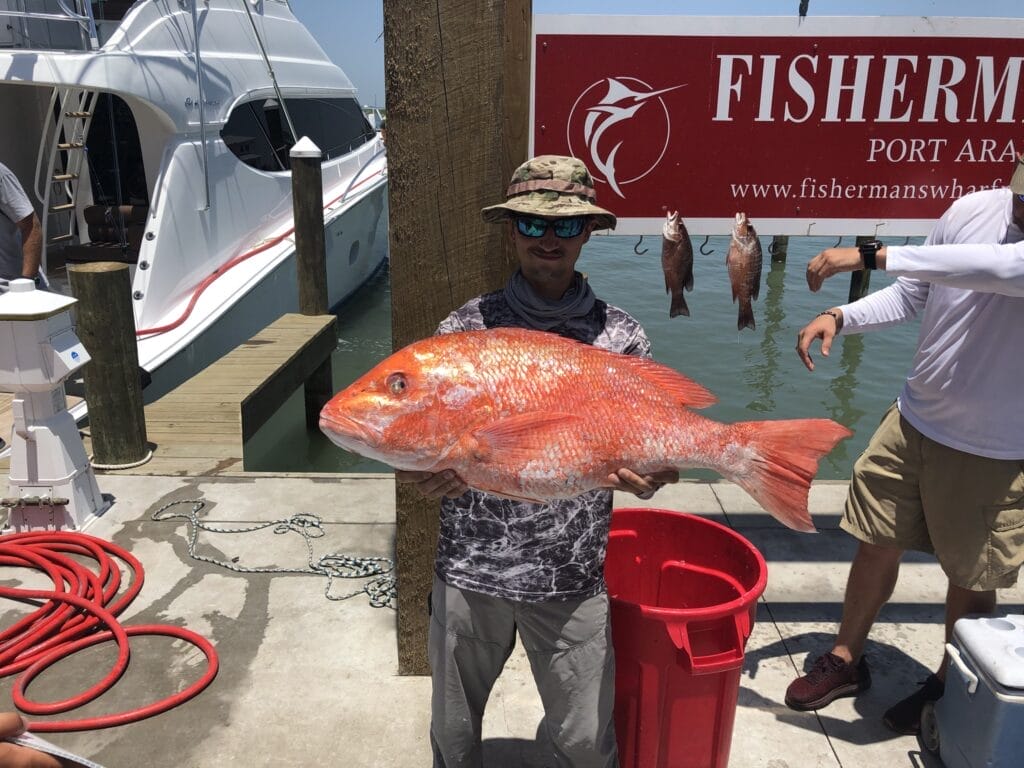
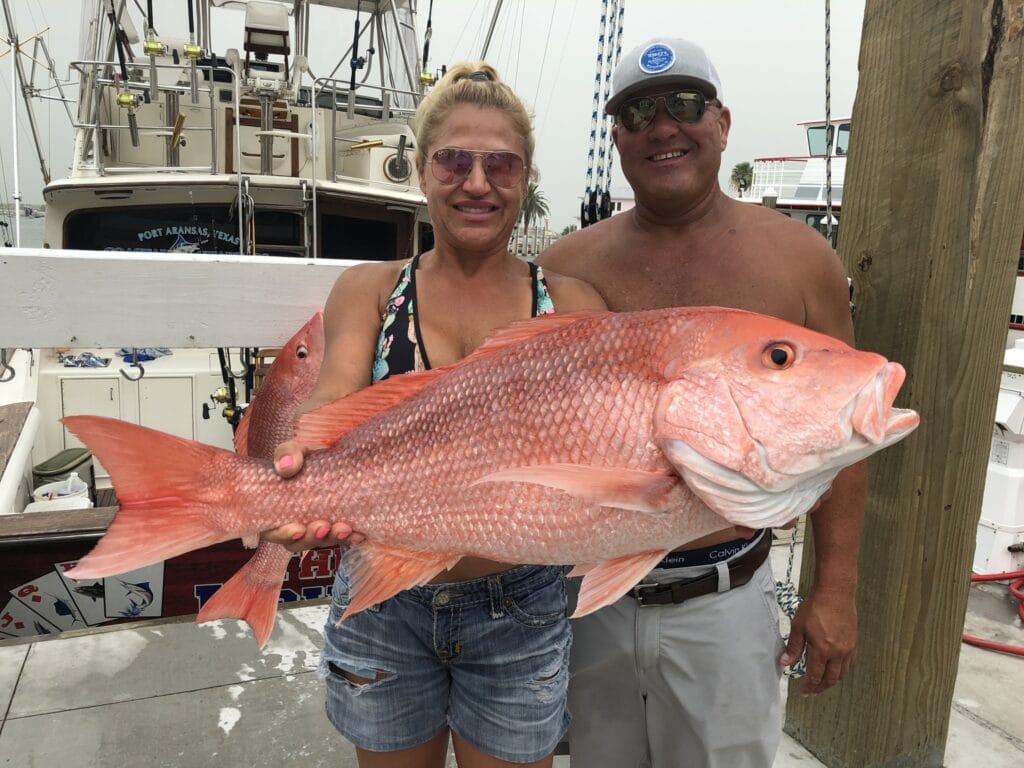
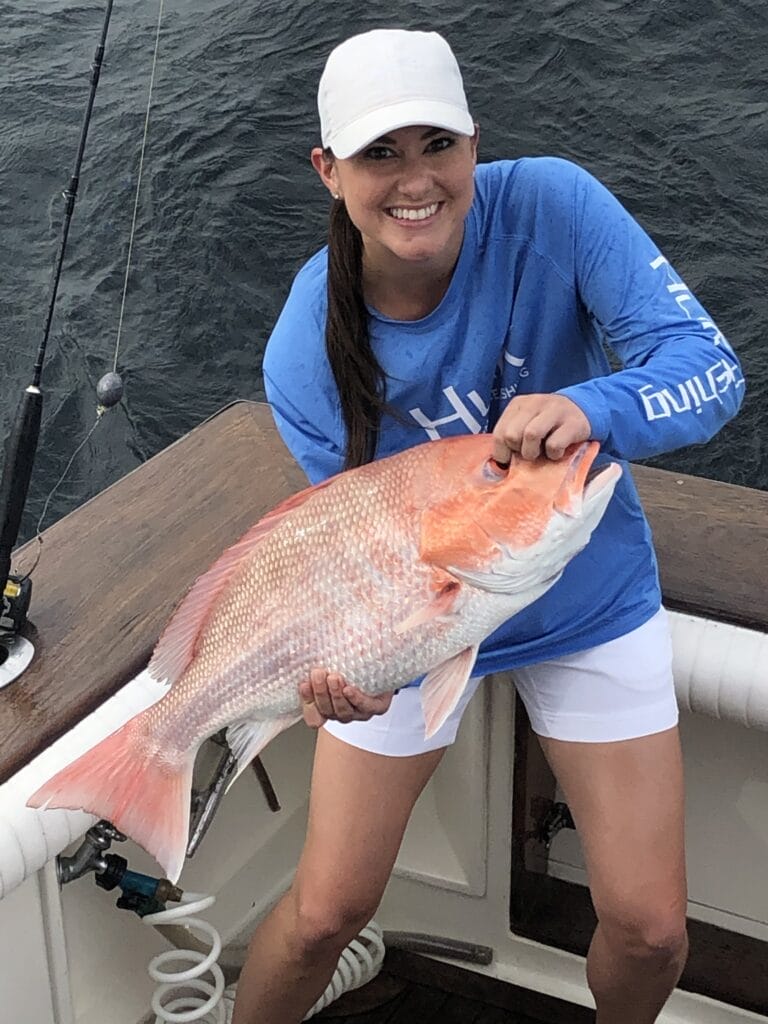
Most trips see eating-size red snapper in the 2–5 pound range, with 8–15 pounders mixed in on deeper structure. Red snapper can reach 30+ pounds, but the typical cooler is a pile of solid, keeper-sized fish. For a closer look at all the species in these waters, see our guide to Gulf of Mexico fish species.
What Else Comes Up on a Snapper Trip
A snapper trip is really a reef trip. The same structure holds a mix of species, and your hooks find whatever is working that day. Some of these are among the best eating fish in the Gulf.
| Species | Where on the Structure | What to Expect |
|---|---|---|
| Red snapper | Bottom, tight to structure | Main target. 2–5 lbs typical, 8–15+ lbs on deeper reefs |
| Vermilion snapper | Bottom, same reefs | Smaller but excellent eating. Often caught in numbers |
| Greater amberjack | Mid-column, around rig legs | Powerful fight. Hit heavier live bait rigs |
| Gray triggerfish | Bottom, reef structure | Firm, sweet meat. Common on snapper spots |
| Kingfish | Surface and mid-column | Pass through the zone. Fast, slashing strikes |
| Grouper (red/gag) | Deeper ledges and structure | Bonus catch. Hit big baits, dive for the rocks |
Red snapper hit hard and dive straight for structure. In 80–130 feet of water on bottom rigs, you feel everything. The crew coaches you through it, especially if you have not done it before.
Gear and What to Bring
The boat provides rods, reels, tackle, bait, ice, and all federally required release gear. You bring:
- A Texas saltwater fishing license with a saltwater endorsement — buy it online, takes about 10 minutes
- Sunscreen and a hat
- Water and snacks (no glass containers on the boat)
- Layers — Gulf weather shifts, and morning runs can be cool even in summer
- Motion sickness medication if you are prone to it (see below)
Seasickness on Offshore Trips
Offshore snapper trips run in open Gulf water. If anyone in your group has a history of motion sickness, they should talk to their doctor before the trip. Scopolamine patches, available by prescription, work well for people who know they are sensitive.
Eat a light breakfast. Skip greasy food and heavy coffee. Stay on deck in the fresh air, and keep your eyes on the horizon if you start feeling off. Sitting below deck staring at a phone is the fastest way to get sick.
If someone in your group wants to fish but would rather stay in calmer water, our bay fishing trips run in protected bays closer to shore.
Why the 2026 Season Is the Longest in Years
Gulf red snapper were at roughly 2% of their historic biomass in the 1990s after decades of overfishing. A federal rebuilding plan has been restoring the stock ever since, and the results show up in longer seasons. More fish in the water means more days to catch them.
| Year | Charter Season Length | Change |
|---|---|---|
| 2025 | 128 days (June 1 – Sept 16, plus reopening) | — |
| 2026 | 147 days (June 1 – Oct 26) | +19 days |
If the 2026 catch target is not reached by October 26, NOAA can reopen the season — which is exactly what happened in late 2025. For a deeper look at how the rebuilding plan works, see NOAA’s overview of Gulf red snapper management.
When to Book
Red snapper season opens June 1, but the fishing stays strong into fall.
- June and July — Peak demand. Snapper are stacked on structure after the closed period, and the water is warm enough for comfortable trips. Weekends and holidays fill weeks in advance.
- August and September — Still strong fishing. Crowds thin out after the Fourth of July rush. Water temperatures peak, and fish feed heavily mornings and evenings.
- October (charter boats only) — The season for private boats is over, but charter boats fish through October 26. This is when you have the reefs to yourself. If you can fish a weekday in October, do it.
For a month-by-month breakdown of everything running off Port Aransas, check our Port Aransas fishing calendar.
Book a Red Snapper Trip
Coastal Charters offers 4 and 6-hour red snapper trips out of Port Aransas. All trips accommodate up to six guests and include rods, reels, tackle, bait, and ice.
Call Danny at (361) 850-0909 to book your snapper trip or ask about other options. He will help you pick the right trip for your group.